


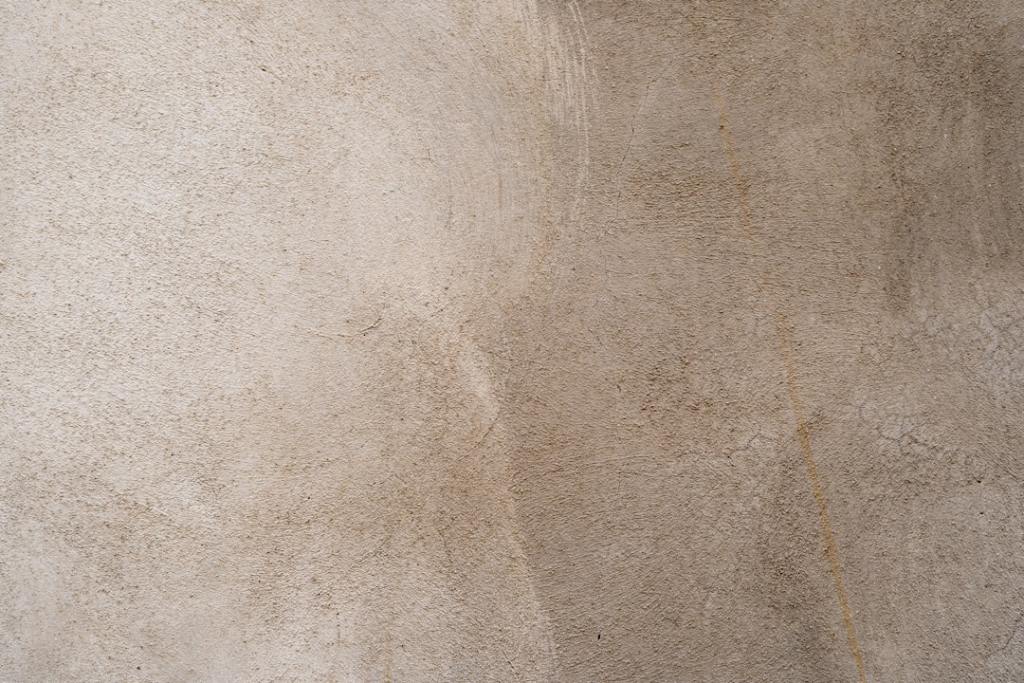
Walk into a room finished in real plaster and you feel it before you can explain it. Light moves across the wall instead of sitting flat on it. The color has depth. Up close, you can see the hand that made it. That is why more homeowners across North San Diego County are skipping paint on their feature walls and asking about Venetian plaster, limewash and Roman clay.
The problem: those three names get used interchangeably online, and they are not the same thing. They look different, wear differently, cost differently and suit different rooms. Here is how I explain the difference to clients standing in front of their own walls.
The Short Version
| Venetian Plaster | Limewash | Roman Clay | |
|---|---|---|---|
| Look | Deep, layered, marble-like; can be polished to a soft sheen | Soft, chalky, cloudy movement; completely matte | Smooth, suede-like; subtle movement with a low sheen |
| How it goes on | Multiple thin coats with a steel trowel, then burnished | Brushed on in loose, overlapping strokes | Thin coats with a trowel or spatula, lightly burnished |
| Durability | Very hard once cured; can be waxed or sealed | Most delicate; best on walls that don’t get scrubbed | Moderate; can be sealed for higher-traffic areas |
| Relative cost | $$$ | $ | $$ |
| Best for | Statement walls, entries, powder rooms, fireplaces | Bedrooms, living rooms, exteriors, a relaxed old-world feel | Living spaces, dining rooms, modern-organic interiors |
Venetian Plaster: The Heirloom Finish
Traditional Venetian plaster is built from lime putty and fine marble powder. It goes on in several razor-thin layers with a steel trowel, and each pass is compressed into the one below. The final step is burnishing — working the surface with the trowel until it closes up and takes on that polished, almost stone-like depth.
Because every layer is hand-troweled, no two walls ever look identical. That is the point. It is also why Venetian plaster sits at the top of the price range: the material is only part of the cost. The rest is time and skill.
- Choose it when you want the wall itself to be the artwork.
- Watch out for walls with poor prep — plaster magnifies what is underneath, so the drywall has to be right first.
- Maintenance: a protective wax or sealer can be added, and small scuffs can often be buffed back out.
Limewash: Soft, Breathable, Old-World
Limewash is the most relaxed of the three. It is a thin, lime-based coating brushed on in loose, crossing strokes, which is what gives it that cloudy, weathered movement you see in Mediterranean villas and coastal homes. It dries completely matte.
It is also the most affordable way to get a mineral finish on a wall. The tradeoff is durability: limewash is not the finish for a hallway where kids drag backpacks or a kitchen backsplash that gets scrubbed. Over drywall it also needs the right mineral-compatible primer, or it will not bond and age properly.
- Choose it when you want warmth and texture without shine.
- Watch out for high-touch areas — plan on refreshing it over the years.
- Bonus: it works beautifully on exterior masonry and stucco, too.
Roman Clay: The Modern In-Between
Roman clay sits between the other two. It is applied with a trowel in thin coats like Venetian plaster, but it is designed for a softer, velvety surface rather than a high polish. Think suede, not marble. You get gentle movement and a hand-finished feel that fits right into modern-organic and minimalist interiors.
- Choose it when you love the plaster look but want something calmer and more contemporary.
- Watch out for DIY kits — the difference between blotchy and beautiful is all in the trowel work.
- Protection: a sealer can be added for bathrooms and higher-traffic rooms.
What About Microcement?
Microcement is a different category — a thin cementitious coating that can go on walls, floors, showers and even countertops for a seamless, concrete-look surface with no grout lines. If you are redoing a bathroom and want one continuous finish from floor to ceiling, ask us about it separately. It is a great material, but it is a different conversation than decorative wall plaster.
The Part Nobody Talks About: The Wall Underneath
Every one of these finishes is only as good as the surface it goes on. Plaster does not hide bad drywall — it highlights it.
Before any decorative finish, the substrate needs to be flat, solid and properly primed. Humps at seams, nail pops and old patches will read straight through a burnished plaster wall. Because we are a drywall company first, we fix and prep the wall ourselves before the finish ever goes on. That is the difference between a finish that looks good on day one and one that still looks right years from now.
Which One Should You Pick?
- Want the “wow” wall? Venetian plaster.
- Want soft, matte, lived-in character on a budget? Limewash.
- Want a calm, modern hand-finished look? Roman clay.
- Want seamless walls and floors in a wet area? Microcement.
Still not sure? That is normal. The best way to decide is to see samples in your own light — morning sun and evening lamps change these finishes dramatically. We are happy to bring sample boards out and talk it through. You can also see every finish we offer on our Decorative & Specialty Finishes page.
Quick FAQ
Can these go over regular drywall?
Yes, with the right preparation. The drywall has to be smooth and sound, and each finish needs its matching primer or base coat.
Can you do just one accent wall?
Absolutely. A single entry wall, fireplace surround or powder room is one of the best ways to start.
How long does it take?
It depends on the finish and the size of the area. Troweled plasters are applied in multiple coats with drying time between them, so plan on more than a single day for most projects.
Ready to Talk About Your Walls?
Above & Beyond Drywall Inc. serves North San Diego County from Vista, CA. Licensed, bonded and insured — CSLB #1083832. Send us a few photos and a short description and we’ll get back to you with next steps.