“Level 5” gets thrown around a lot in remodeling conversations, usually right after someone notices shadows and seams on a freshly painted wall. So what does it actually mean, and when is it worth paying for? Here is the plain-English version from a crew that finishes drywall every day in North San Diego County.
Drywall Finish Levels, Explained
The drywall industry uses a scale from Level 0 to Level 5, published by the Gypsum Association (GA-214), to describe how far the finishing is taken. Each level builds on the one before it.
| Level | What it includes | Typical use |
|---|---|---|
| 0 | Board hung, no taping or finishing | Temporary construction |
| 1 | Tape set in joint compound at joints | Attics, above ceilings, areas out of view |
| 2 | Tape plus one coat over joints and fasteners | Garages, warehouses, under tile |
| 3 | Level 2 plus another coat | Surfaces getting heavy texture |
| 4 | Level 3 plus a third coat, sanded smooth | Most homes with flat paint or light texture |
| 5 | Level 4 plus a thin skim coat over the entire surface | Smooth walls, critical lighting, glossy or dark paint |
What Makes Level 5 Different
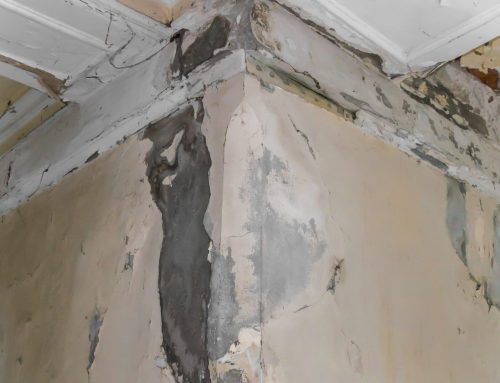
At Level 4, the joints and screws are finished, but the rest of the wall is still bare drywall paper. Paper and joint compound absorb paint differently, and under the right light that difference shows up as flashing, visible seams and “picture framing” around each sheet.
Level 5 solves that by applying a thin skim coat across the whole surface. Now the entire wall has the same texture and porosity, so paint goes on uniformly and the wall reads as one continuous plane.
Level 4 hides the seams. Level 5 makes the wall disappear.
When Level 5 Is Worth It
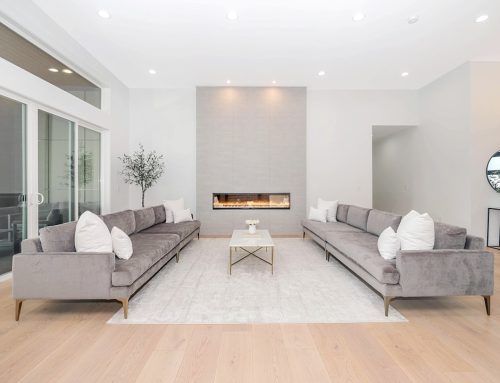
- Critical lighting: big windows, skylights, or wall-washer lights that rake across the surface and exaggerate every ripple.
- Smooth walls: if you are going with no texture at all, Level 5 is the difference between “smooth” and actually smooth.
- Glossy or dark paint: semi-gloss sheens and deep colors show everything underneath.
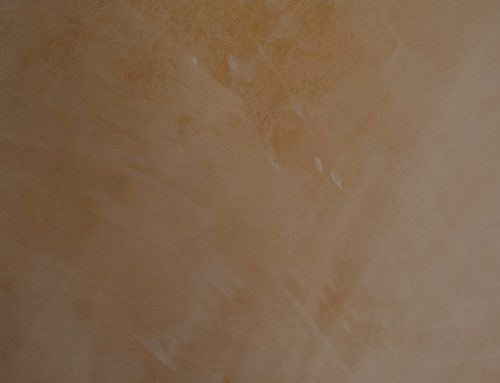
- Decorative finishes: Venetian plaster, Roman clay and other troweled finishes need a flat, uniform base.
- High-end remodels: when the rest of the room is premium, the walls should be too.
When Level 4 Is Plenty
- You are applying orange peel, knockdown or another texture — the texture itself hides minor surface variation.
- The room has soft, indirect light and flat paint.
- It is a garage, closet, or utility space.
How We Do Level 5 Right
A skim coat is only as good as the Level 4 work under it and the hand applying it. We make sure joints are flat, fasteners are set, and corners are straight first. Then the skim coat goes on thin and even, gets sanded, and is checked with a work light held low across the wall — the same way sunlight will hit it later — before a primer ever goes on.
Quick FAQ
Does Level 5 cost a lot more?
It adds material and labor for the extra coat and sanding, so expect it to cost more than Level 4. For the rooms where it matters, most homeowners feel it is the best money they spent on the walls.
Can you upgrade existing walls to Level 5?
Often, yes. We can skim coat existing walls to take them smooth, including walls where old texture is being removed.
Is Level 5 required for smooth walls?
It is not required, but it is strongly recommended if you want smooth walls that still look smooth when the sun comes through the window.
Ready to Talk About Your Walls?
Above & Beyond Drywall Inc. serves North San Diego County from Vista, CA. Licensed, bonded and insured — CSLB #1083832. Send us a few photos and a short description and we’ll get back to you with next steps.